
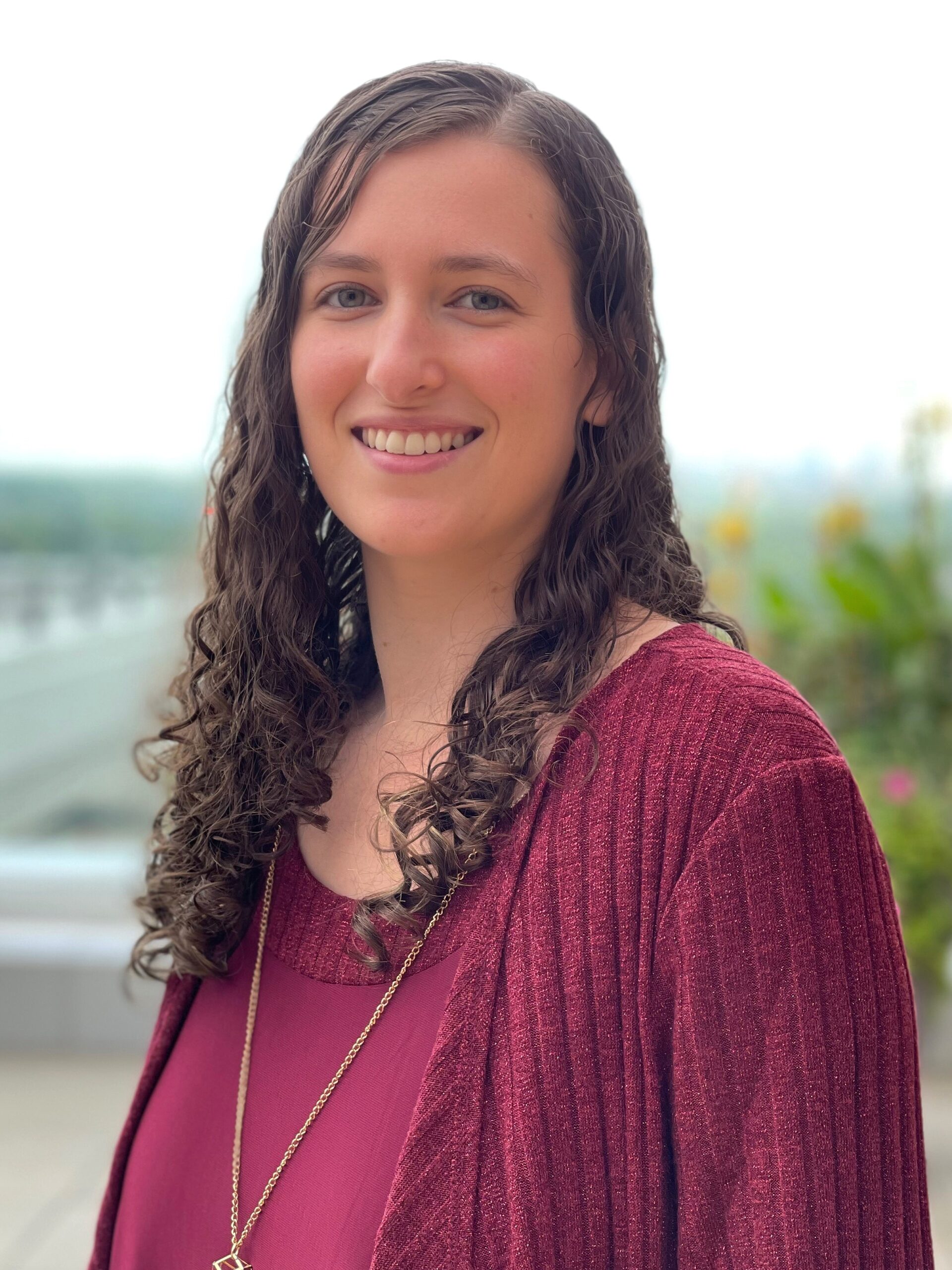
Sarah Curup Callif, DrPH, MPA
Associate Director, Clinical Research
PSC Partners Seeking a Cure
Biography:
Dr. Sarah Curup Callif’s work focuses on the science and practice of community engagement in rare disease research. She holds a Doctorate in Public Health, a Master’s degree in Public Administration, and a Bachelor of Science in Community Engagement and Education. Due to her personal connection to rare diseases, she has spent more than a decade coordinating patient-led research, community-based engagement and education, and multi-stakeholder collaboration. For her dissertation, she investigated how community-engaged research (CEnR) can help PSC research priorities in public health.
At PSC Partners, Sarah serves as the Associate Director of Clinical Research. As part of the organization’s research team, she helps coordinate several patient-led research programs such as the International Collaborative Research Network, the Research Seed Grants Program, and the upcoming PCORI-funded project focused on building capacity for comparative effectiveness research on PSC-CCA. Her approach encourages patients, relatives, and caregivers to be essential partners in identifying priorities, defining meaningful outcomes, and expediting research achievements.
Q&A with Sarah Curup Callif, PSC Partners’ Associate Director of Clinical Research
What drew you to rare disease research?
A number of rare diseases run in my family, so I’ve seen firsthand how uncertainty, delayed diagnosis, and limited treatment options affect patients, relatives, and caregivers. That personal connection – especially the motivation to drive research toward treatments and cures for my own kids – strengthened my interest in patient-centered research, education, and advocacy. I love working with PSC Partners because the community is so active, knowledgeable, and collaborative. I also believe that research accomplishments for one rare disease can expedite progress for all who are impacted by rare diseases.
What does community engagement mean to you?
To me, it is a scientific approach to ensuring various stakeholder groups – such as patients, relatives, caregivers, clinicians, researchers, and public health practitioners – meaningfully collaborate to shape research priorities, decisions, and actions. I utilize a framework of Community-Engaged Research (CEnR) that transforms traditional perceptions of ‘participation’ or ‘outreach’ to make sure that PSC Partners’ model for patient-led research can fully function on a daily basis.
What would you say to patients or caregivers who’d like to get involved in research?
I’d encourage everyone to trust themselves, i.e. to recognize and honor their own lived experience. Each person truly brings a unique mix of skills, resources, and interests – and we need everyone’s help to piece together the puzzle and achieve the organization’s mission.
Please don’t hesitate to reach out, whether it’s to learn about current volunteer opportunities or to learn more about the logistics of patient-led research: email us at research@pscpartners.org. Especially through the PCORI project, PSC Partners will offer opportunities to get involved through listening sessions, events, surveys, and other engagement activities. Patients, caregivers, relatives, researchers, and clinicians are encouraged to join our mailing list for updates and participation opportunities.
What advice do you have for researchers or clinicians hoping to incorporate community engagement science into their practice?
Similarly, I’d encourage people to take the first step by reaching out. We provide personalized consultations to help researchers or clinicians with considering how to achieve higher levels of patient partnership. There are a number of educational tools available, even for those working in preclinical settings with seemingly little opportunity for community engagement.