

Caregivers
PSC Partners Seeking a Cure supports the very special people who become caregivers for individuals with PSC. Together with the patient and health care professionals, caregivers are vital to the team. While every PSC situation is different, we are all together in the fight, and we hope the information in this section proves helpful to these dedicated individuals.

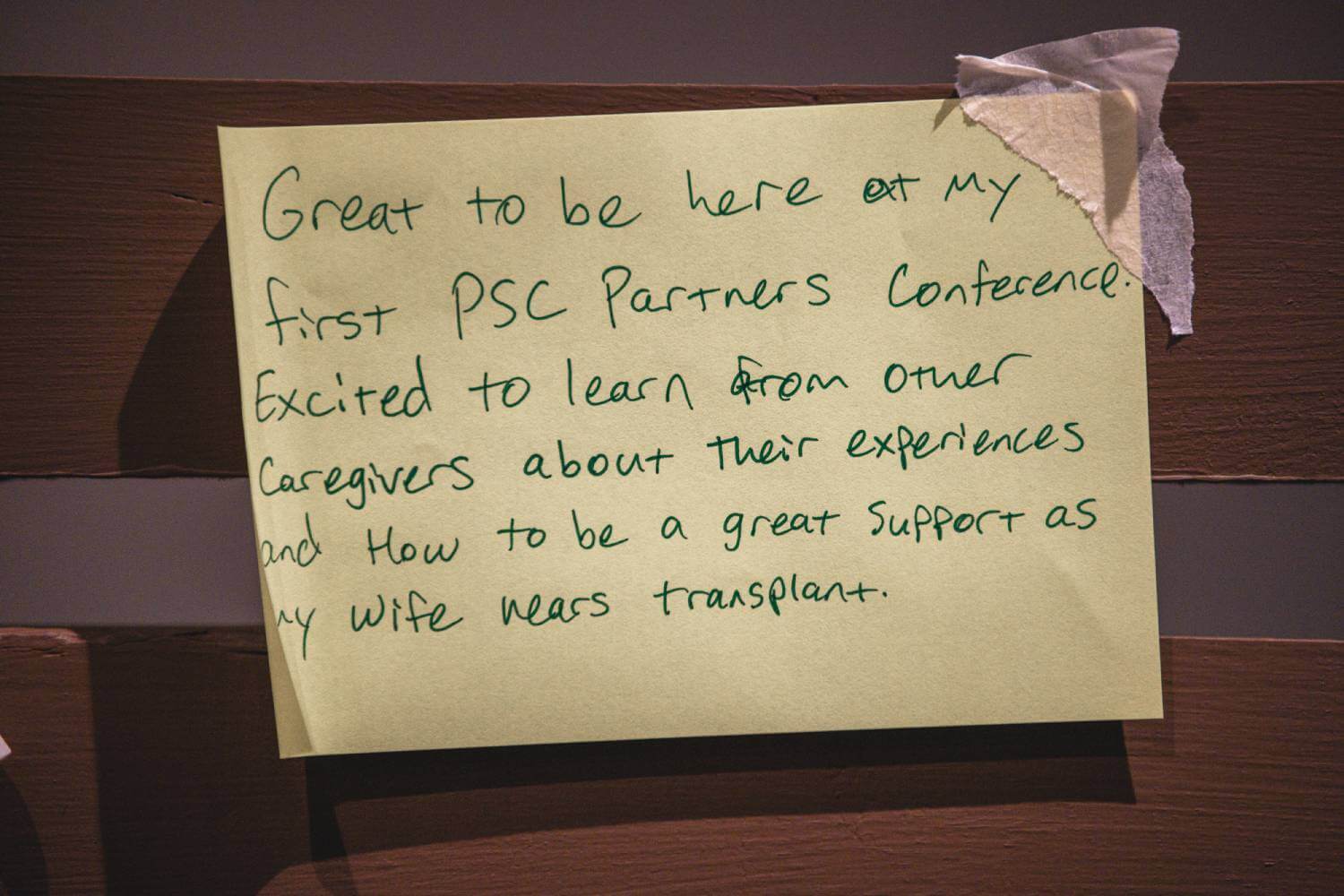
Support for Caregivers
Caregivers in the PSC Partners network contribute advice and garner support in various ways, including our Facebook support groups and our annual PSC Partners Conference.
- Join the Facebook group Open and Closed (private) Support Groups
- Attend our annual conference and other events
Visit our Support page to view all the ways you can find others to connect with.
Caregiver Involvement
- Some people with PSC primarily manage their condition independently, with caregivers providing light support—such as tracking medical information or helping with documentation.
- Others may depend more heavily on a caregiver to take an active role in day-to-day management, including coordinating medications, arranging appointments, and supporting overall care logistics.

Remember the Rest of the Family and Yourself
Remember the Rest of the Family and Yourself
- Balancing the caregiver role with all of the other roles and responsibilities you have may take time.
- Caregivers may go through stages of emotions similar to what a patient experiences, such as denial, anger, unrealistic expectations, and grief.
- It is important for the caregiver to maintain their own health. This may feel like a delicate balancing act, but if a caregiver is exhausted or ill, they cannot care for their loved one(s). It is helpful to identify what needs to be done, who else can help, and then effectively communicate what is needed. Remember that, many times, people (other family members, friends, and community resources) are interested in helping. Friends and family may appreciate it when the caregiver asks them to help. Sometimes a caregiver may want/need to consider hiring help for periods of time.
- As a caregiver, you are faced with many challenges. While it is normal to have feelings of fear, anger, and uncertainty, it can be helpful to talk to a caring friend or family member or seek out professional assistance to help you cope.
- There is additional support available, including the PSC Partners website and social media groups, community organizations, and PSC Partners mentors.
- Some find it helpful to develop a phone/email/text tree to better and more efficiently disseminate necessary information.
- Developing strategies for handling situations that occur over time can help build your confidence and resiliency.
Other Stress Relievers
As in any stressful situation, there are a number of constructive outlets that may work for you:
- Keeping a journal
- Going outside for even a few minutes and enjoying the fresh air, plants, clouds, and sky
- Exercising
- Talking with friends
- Appreciating humor
- Listening to your favorite music
- Reading
- Lying down or sitting in a recliner with your feet up for 15 to 20 minutes
- Drinking plenty of fluids, especially water
- Eating a well-balanced diet, and eating at regular intervals
- Considering whether calls or visits are helpful or create more stress at that time. You can limit calls or visits to honor your own needs and private time.
- Sharing your feelings or concerns with a trusted friend, your spiritual counselor, or your healthcare team
The PSCer – Caregiver Relationship
It may be hard to see how PSC impacts someone you care about. Understanding PSCers’ reactions to this rare disease may help caregivers better understand, communicate with, and support the PSCer.
Common PSCer Reactions to the Illness
Individuals with PSC may experience a roller coaster of emotions, which they may have difficulty controlling. They may:
- Express anger, and/or become depressed and quieter.
- Find it difficult to express their thoughts, or may not think as clearly as they used to.
- Liver disease can affect the brain. For example, some PSCers have brain fog, which can lead to memory issues and make it harder to pay attention and think clearly.
- Sometimes people with advanced liver disease can develop hepatic encephalopathy (HE). The PSCer’s doctor will diagnose and prescribe treatments for HE.
Common Caregiver Reactions to the Illness
- Caregivers have their own emotions, which can be hard for them to admit, perhaps because they feel, “I should be strong and able to handle this.” They may feel guilty for various reasons, including having these emotions. The caregiver may also feel like they are on an emotional roller coaster.
- In addition, caregivers may be seeking ways to maintain their primary roles, such as parent, spouse, or other family member, so that they can support and nurture ongoing relationships with all family members.
- It is challenging to deal with many emotions and competing responsibilities.
Suggestions to Reduce
Conflict and Stress
Supporting the PSCer while maintaining everyone’s usual daily life to the fullest extent possible is a beneficial goal.
Honoring Individual Experience
It can be helpful to avoid words or expressions like “We understand” or “I know how you feel.” Although the caregiver loves and cares for their PSCer, those who do not have PSC cannot fully understand what the PSCer is experiencing and enduring.
The Gift of Listening
A gift the caregiver can give everyone, especially their PSCer, is to be a good listener. It is helpful to reflect back and use the words the PSCer is saying; for example, “I hear you saying you’re in a lot of pain today, how can I help?” Careful listening builds a supportive environment and helps the individual know that they are being heard.
Positive Communication Strategies
Some stress can be expected in the relationship between the caregiver and the PSCer. Good communication skills can help lessen this occurrence. One positive strategy can be using “I” instead of “You.” For example, “I would like to see if we can work out a plan,” or “May I ask if you can help with…?” tends to promote cooperative problem solving.
Caring for Yourself Matters
The PSCer may feel bad about how their disease has impacted your life. By taking care of yourself, through a hobby, regular exercise, taking an extra vacation day from work, etc., you are not only recharging yourself, but you also may be lessening possible guilty feelings held by the PSCer.
Living with Change
PSC is an evolving situation.
Caregivers and Medical Providers
Choosing Medical Providers
Please talk with the PSCer about the following:
- If your PSCer lives near a large university or medical center, you can request an appointment with a hepatologist and/or gastroenterologist who treats PSC patients. If your PSCer’s current doctor only treats a few PSCers, you can request a consultation with a hepatologist or gastroenterologist who cares for many PSC patients.
- Remember, you and your PSCer may need to be patient with medical providers who are not familiar with PSC, as it is a rare liver disease.
- Try to choose a medical provider with whom the PSCer and you are comfortable–a doctor who can listen and provide advice, and willingly, honestly, and intelligibly answers questions.
Get a Second Opinion
- Obtaining a second opinion during initial diagnosis or when a difficult scenario arises can be helpful.
- A second opinion generally means wanting more information, confirmation, and/or peace of mind.
- Most doctors will appreciate the additional review and discussion of findings from a second opinion.
Be Willing to Change Doctors
- Be willing to consider changing doctors if you do not feel that the doctor is providing comprehensive care or answering your questions.
Understanding Labs and the Treatment Process
- Blood/lab test results may vary in PSCers, including variation between normal and abnormal levels. You will want to discuss the lab tests with the PSCer’s physician.
- If multiple physicians are involved, requesting that one doctor serve as a medical coordinator can be helpful. Because PSC may impact people differently, and PSCers often have other diseases, the treatment process may involve several physicians with different specialties.
Medications
Steps to Managing Treatment
Know the Medications
Educate yourself about the medications the PSCer is taking.
Keeping Track Made Easy
If needed, post a calendar for reference to help the PSCer stay on schedule.
Monitor Medication Side Effects
Watch for side effects to the medication(s). If side effects are noted, discuss with your PSCer how to report them to the doctor.
Managing Multiple Medications
To assist with medication dosing, especially when multiple medications are taken, consider preparing a one or two-week supply using medication pill boxes/sets.
Staying on Track with Timers
Some pill boxes are equipped with timers that alert the PSCer and caregiver when it is time to take the medication.
Portable Medication Support
Remember that pillboxes can be a vital organizing tool when the PSCer is away from home.
Important Health Info Checklist
Maintain a list of key medical information for the PSCer. Examples of such information include:
- Medications being taken (including vitamins, herbs, and supplements), with dosage and frequency
- Allergies
- Other medical condition(s)
- Past surgical interventions
Below is one example of how to organize this information onto an easy-to-carry card.
| PSCer’s Name | Date of birth | Address |
| Telephone numbers(s) | Blood type | Health insurance information |
| Hospital patient number | Allergies | Emergency contacts |
| Physicians telephone numbers | Medical conditions | Listing of current medications |
Legal and Travel Considerations
Consider what might occur in the future for the person with PSC, and what might be needed from you, should certain conditions warrant it. These may include:
Legal Documents
Some legal documents that people with PSC should consider having are:
- Power of attorney that authorizes someone to act as a legal representative and make decisions on behalf of the PSCer
- Advance medical directive that lets the family and medical team know what medical treatments the PSCer wants if he/she is too sick to make decisions for themselves
- Statement about whether the PSCer wishes to be an organ donor
- Will that outlines what the PSCer wants done with his or her property in the event of death
Travel Considerations
Traveling is absolutely possible for people with chronic illnesses, and careful planning can assist in creating a less stressful trip. Here are a few tips:
- Consider getting travel insurance that covers your trip. Some things to consider are:
- Review the policy’s definition for terms such as “stable” and “effective date” to ensure the policy covers your specific travel. Look to see what the policy states about “pre-existing medical conditions.”
- Take the insurance company’s telephone number with you on your trip.
- Prepare a care package to take on trips. Some possible items may include:
- Food items that the person ordinarily is able to eat without excessive problems
- Medications as a carry-on
- Additional as-needed medications, such as for nausea/vomiting, or if someone gets cholangitis, an emergency antibiotic
- Hand sanitizer
- Emesis/Vomit bags
- A copy of medical information and the pertinent healthcare providers ‘ names and contact information.
- People with significant fatigue may want to contact the airline in advance and request wheelchair assistance. Some airlines also provide front seating for those with disabilities.

Education
It is important for caregivers to educate themselves about PSC on many levels, including:
- Understanding the physician’s explanation, education, and treatment plans
- Comprehending the experience being faced by the PSCer
- Having the ability to talk with the PSCer about their illness
- Becoming a well-informed support person and advocate
- Read information on this website
- Talk with other PSCers and caregivers about their experiences in the Facebook Support Group
- Find tools, forms and education in our Resources section
- Be mindful when searching for information online. It’s easy to feel overwhelmed, and not everything you find will be accurate or relevant. If you’re researching PSC, keep in mind that some information may be outdated. Focus on sources that are reliable, evidence-based, and reviewed by medical experts.
- Remember that everyone with PSC has a different path. The disease can vary widely from person to person in how it progresses, what symptoms appear, and how it responds to treatment. What you read or hear about someone else’s experience may not reflect your own, so it’s important to work closely with your care team and focus on what’s right for you.
- Keep in mind that PSC is rare, and some family practitioners or internal medicine physicians may not have experience caring for someone with PSC. You may want to suggest to your PSCer that requesting a consultation with a hepatologist (liver specialist) or a gastroenterologist (a physician for specific gastrointestinal tract diseases) who specializes in caring for those with PSC would be beneficial.
- For those with advanced PSC, it may be necessary to apply for social security and/or state disability benefits.
- Check the Social Security website for more information.
- In the event it does become necessary to apply for disability benefits, ensuring the accuracy of that documentation will be very important.
- Social security has specific definitions of disability for adults and children.
- There are several things to keep in mind regarding patients’ rights, including:
- Many medical practices have a patient bill of rights
- You can request a copy of your medical records
- Good communication between the patient and medical team is important to build trust and understanding
- What is informed consent?
- Informed consent is the process in which the physician discusses the purpose, benefits, and potential risks of a medical treatment or surgery, so the patient can ask questions and make a choice that is best for them.
- What if the patient or caregiver has questions or concerns?
- Many medical groups and hospitals have social workers who can help if you have questions or problems.
- Hospitals employ patient advocates who can help with billing and insurance questions, and some may be able to assist with investigating complaints or acting as a liaison between the patient and their family and the hospital.
Informational Sites
This section provides information on some areas that may be of particular interest to caregivers. PSC Partners provides these links for convenience and has no control or responsibility over external sites’ content, management, or availability. When you use an external link, you are no longer on this site, and PSC Partners’ Privacy Policy will not apply. Please note that the inclusion of any outside, non-PSC Partners link does not imply a recommendation of that site nor an endorsement of the views expressed within it.
Affordable Care Act provides information on the Affordable Care Act. Among the areas covered are Coverage, Costs, and Care. One important aspect of this statute for caregivers and people living with chronic illnesses is that individuals may no longer be denied health insurance coverage based on being diagnosed with a pre-existing condition.
PSC Partners Patient Facebook Support Group for PSCers and caregivers to share social connection, education, and experiences. In addition, PSC Partners has pages on YouTube, LinkedIn, and Instagram.
The goal of the Patient Registry is to collect de-identified information on patients diagnosed with primary sclerosing cholangitis (PSC) to increase and accelerate research, enable clinical and drug trials, and find effective treatments for PSC. Caregivers can encourage PSCers to join the Patient Registry, and parents of young PSCers can register their child.
Social Security Disability Provides information on benefits for people with disabilities. Among the areas discussed are Social Security Disability Insurance (“pays benefits to you and certain members of your family if you are ‘insured,’ meaning that you worked long enough and paid Social Security taxes”) and Supplemental Security Income (“pays benefits based on financial need”).
The mission of the Caregiver Action Network (CAN) is to promote resourcefulness and respect for the more than 90 million family caregivers across the country. CAN lists ten tips for family caregivers and also has presentations on various topics of interest to caregivers (e.g., medication checklist, doctor’s office checklist).
National Alliance for Caregiving Recognizing that family caregivers provide important societal and financial contributions to maintaining the well-being of those they care for, the Alliance is dedicated to improving the quality of life for families and their care recipients through research, innovation, and advocacy.

Take the First Step
Toward Connection
Stay connected to the PSC community. Get updates on research, events, and stories straight to your inbox.
Subscription Form
"*" indicates required fields