
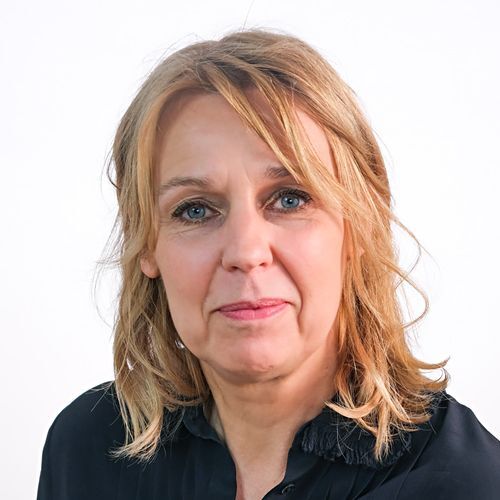
Behind the Numbers with the WIND-PSC Statistician – Dr. Bettina Hansen
Professor of Clinical Biostatistics, Erasmus MC (Netherlands)
Professor, University of Toronto
Affiliated Scientist, Toronto Centre for Liver Disease, University Health Network
Role in WIND-PSC
Dr. Bettina Hansen plays a central role in shaping the WIND-PSC study.
As the study’s lead statistician, she ensures that data collected from patients’ regular clinic visits is transformed into reliable, high-quality RWD for use in clinical trials.
Research Focus
- Dr. Bettina Hansen has extensive experience in using RWD in other liver diseases to support the development of new treatments.
- She applies advanced statistical methods to understand disease progression, predict patient outcomes, and inform the design of future clinical trials.
- Her research focuses on identifying which patients benefit most from specific treatments and to support drug discovery for rare liver diseases that are challenging to study through traditional trials.
Role in PSC Partners Programs
- Lead Statistician and Steering Committee Member, WIND-PSC study
- Member, PSC Partners Scientific and Medical Advisory Committee (SMAC) as a grant reviewer
- Co-chair, 2024 PSC Partners International Collaborative Research Network (ICRN) Convening
Collaborations
- Active member, International PSC Study Group
- Leads international collaborations on autoimmune and rare liver diseases
Q&A with Dr. Bettina Hansen: Harnessing WIND‑PSC Data to Shape the Future of PSC Treatments
How does the WIND-PSC study take information from regular clinic visits and turn it into evidence that can help develop new treatments?
The data from your standard of care visits as part of the WIND‑PSC study form an overall comparator data for the data collected during future trial visits, allowing us to observe whether there are any changes and whether the new drug might be having an effect.
What are the biggest challenges in analyzing this kind of real-world data, and how do you make sure the results are reliable?
The biggest challenges are ensuring that the data is complete and that it is unbiased. With newly developed statistical techniques and modeling strategies, these challenges can be solved, but the required data must still meet a high bar for quality.
How will the results of WIND-PSC make a real difference in patients’ lives and the future of PSC care?
With the use of RWD and RWE, investigational trials of a new drug can be conducted quickly and more ethically. We do not need to ask patients to stay on placebo for 5 years. Instead, we reuse and recycle the knowledge of existing RWD in WIND as a placebo arm to compare with a new drug.
“Let’s REUSE and RECYCLE your PSC-care today to Shape TOMORROW’S PSC-Welfare. We are all working on this together and you are a piece of the puzzle." -Dr. Bettina Hansen


